%20-%20Tint%20100.png?width=110&height=58&name=Logo%20-%20Standard%20-%20Blue%20(1080%20x%20597)%20-%20Tint%20100.png)
Original research and conversations with experienced founders and executives navigating biomedical commercialization.
Report
Translational Development: Why Promising Research Stalls on the Way to Patients
How researchers become entrepreneurs by protecting IP, proving commercial viability, raising funds and building the right team.

Table of Contents
Contributors
- Upma Sharma Arsenal Medical
- Robert Chisena, PhD Amplitude Vascular Systems
- Erin McKenna Mass General Brigham
- Carolina Säve Mintz
- Jeffrey Abraham Health Advances
- Ilana Lam Gotlib ILG Consulting
Executive Summary
Translational development in medical devices is an exciting and rewarding field for scientists, clinicians, and bioengineers. But they face many challenges, including protecting intellectual property (IP), assessing commercial viability, raising funds, and crucially, the need to develop new skills and shift their thinking.
Medical device solutions are in high demand for unmet patient needs. The U.S. medical device market reached $189 billion in 2024 and is projected to grow from $199 billion in 2025 to $315 billion by 2032. A driving factor in this growth is the country’s aging population. By 2030, one in five Americans will be aged 65 or older and by 2034, this group of older adults will outnumber children for the first time. The result of this aging population is significant increases in diseases such as diabetes, dementia, and cardiovascular disease. As the cost of healthcare also increases, demand for cost-effective products with advanced capabilities and ease of use for elderly patients will be higher than ever.
Many startups and small and medium-sized enterprises (SMEs) are responding to this demand for novel innovations with medical devices that address patient needs. Translational development, the process of taking basic science from the research lab to the development of better physical tools for patient-focused outcomes, fills the gap between the knowledge produced in study of life sciences to medical devices deployed in clinical settings.
Careers in translational development today are supported by multiple government and academic programs across the country. Making the transition from the academic setting to the corporate world in order to advance an innovation’s commercial development is certainly rewarding but holds specific challenges. These include learning about and understanding key issues such as IP protection, fundraising, commercialization, and more. Throughout the journey, researchers can evolve to become entrepreneurs and overcome these challenges with strategy and expert assistance.
Working in Translational Development
The phrase “translational research” first appeared in the early ‘nineties and was focused primarily on cancer research driven by the by the U.S. National Cancer Institute (NCI). The NCI also connected translational research to the concept “from bench to bedside” in a 1993 publication. The “translational” aspect means translating not only the work from the lab to the clinic and but also between different types of science and knowledge domains — medical science, biostatistics, laboratory science, clinical trials, patent and regulatory, and epidemiology.
Today, translational development is a growing field for clinicians, bench scientists, bioengineers, and more, and many options exist for graduate programs in translational research, including master’s, doctoral, and certificate programs, available to those with or without an existing Ph.D. or M.D. The National Center for Advancing Translational Sciences (NCATS) funds the Clinical and Translational Science Awards (CTSA) Program to support training in translational research. The Translational Science Training Program (TSTP) is a course funded by NCATs for NIH Intramural Fellows. Beginning in 2005, The Howard Hughes Medical Institute (HHMI) Med Into Grad Initiative provided funding to various universities that enabled them to launch programs in translational research. The results included Baylor University’s PhD program in Translational Biology and Molecular Medicine, University of North Carolina’s Certificate in Translational Medicine, and Harvard’s Leder Human Biology and Translational Medicine program.
From Academic to Entrepreneur
The field of translational development in medical devices requires a high level of curiosity, the desire to be multidisciplinary, and a commitment to enhancing patient care. The journey from academic to entrepreneur can be rewarding but also holds many challenges, many of which lie in the differences between academic and entrepreneurial culture. Academics focus on publishing their research and teaching, which is very different than developing commercial products. Translational developers must think differently about the goals of their work, moving from pure research and a focus on publishing to creating real-world solutions for patients’ unmet needs with an eye on where the technology will fit in the marketplace.
Upma Sharma, President & Chief Executive Officer, Arsenal Medical, who made the transition from academia to bench scientist to leadership of a MedTech company, said, “What I really enjoyed from the beginning was thinking about the clinical need in a much more real way. That included close collaboration with clinicians to understand what the true pain points were. In academics, we said, ‘This is a cool material, how can we link it to an application?’ When I joined Lyra Therapeutics, the question was, ‘Let's talk to ten physicians and understand how they see the issues and identify the gap, and then, can we design something to fit that?’”
When making the transition from academia to entrepreneurship, researchers should understand the difference between what it will take to publish a discovery and have its significance acknowledged and what it will take to develop that technology into a promising product that meets a real need and can attract investors.
Researchers must be aware of IP issues. The goal in academia is to publish innovations, but entrepreneurs must protect those innovations before they are shared with anyone. Sharma said, “That was another big learning for me in terms of being careful about your IP position in everything you do.”
Would-be entrepreneurs must also grow their skills, particularly in the area of people management and relationship building. Translational development requires the ability to manage business operations; researchers must either develop their own capabilities, build a team, or find partners that add competencies. Sharma said, “If you look at my journey, it's a journey of learning. You have to be open and willing to always learn, whether it’s how to manage people, or how to talk to the FDA, or how to do an initial clinical study.”
Another difference between academia and entrepreneurship is working in an interdisciplinary team setting where all participants are driven by the same mission. Sharma says, “Your PhD is your PhD, and you're judged on your individual work. I realized that I enjoyed having that team and those different skill sets coming together to try to solve problems.”
Investigators may also need to be flexible about their goals. The path forward for a technology can require a pivot, for example, to focus on a broader indication that is more likely to garner funding. Erin McKenna, Head of Medical Devices and Operating Partner of the Amplify Program at Mass General Brigham and Program Director for Brigham Ignite said, “The key is recognizing what you have and what potential paths to development and commercialization are available to you.”
She advised, “Be persistent and focused but also open to hearing feedback and perspective from others.”
Protecting Medical Device IP
IP refers to “creations of the mind,” including inventions such as medical devices. Inventors can protect their creations through patents, trade secrets, copyrights, and trademarks. IP protection is vital in translational development of medical devices because it insures the investment of time and money in R&D, creates incentives for entrepreneurs to develop innovations that address patient needs, and helps developers attract investors and partners. Failure to legally protect IP from the initial concept presents serious risks, while an intelligent IP strategy that starts early and is continually maintained enables companies to succeed and grow.
Risks of Poor IP Protection
A lack of IP protection can have consequences, including:
- Loss of exclusive rights
- Ability for competitors to copy inventions or patent any improvements to inventions themselves, known as “patent fencing”
- Loss of or failure to obtain investor funding
- Inability to move forward with innovation
- Delayed or failed market entry
- Loss of potential revenue
- Infringement on other IP, exposure to lawsuits, and inability to defend inventions
Legally protecting IP avoids these risk and garners many benefits, including reaping the rewards of time and money spent in R&D, reducing the risk of legal action, and avoiding ownership disputes. Protected IP is vital to attracting investment and M&A interest and helps companies safely partner with others. It can form the basis of regulatory compliance and market access. And the data generated by many medical devices can also be protected as IP, further securing the innovation but also enabling other avenues of licensing and collaboration.
Offensive and Defensive Strategies
IP protection requires two strategic approaches: defensive and offensive. A defensive strategy includes covering core innovations with patents as soon as possible. The first step is to establish rights with a comprehensive provisional patent application to lock in the priority date. Trade secrets are key in the patent and regulatory processes, as well as in how companies are managed. When preparing the provisional patent application and FDA submissions, it is important to avoid trade secret disclosures or indicate confidential information that regulators must redact. When building out a company to develop the product, companies must create trade secret protocols that include physical and digital security measures as well as communications and HR processes including onboarding, termination, and training.
Carolina Säve, Of Counsel at Mintz, Levin, Cohn, Ferris, Glovsky and Popeo, P.C., says, “We strongly emphasize putting as much focus on the trade secrets as the patents. In general, a trade secret program is relatively easy to implement early on, but I’ve often seen companies put it to the side. If you wait, it becomes more challenging and you’re placing the company at increasing risk.”
A defensive IP strategy is the starting point, but an offensive strategy makes it possible to maximize the value of your portfolio and take a strong market position. The Freedom to Operate (FTO) search is the first step and drives an understanding of the competition and the gaps an innovative technology might fill. It is also possible to identify potential partners, collaborators, and licensing opportunities, which are another key aspect of an offensive IP strategy.
Robert Chisena, Co-Founder and CTO of AVS Pulse, said, “Studying the space is important, so that you know where the white space is. When you’re about to start a technology company, you better know everything that’s out there at the moment and where your place is going to be.”
An offensive strategy also includes trademarks as part of a clear brand strategy and copyrighting items such as software code, training materials, and marketing collateral. Importantly, the strategy should emphasize optimizing patents by filing new claims or tweaking existing claims based on market trends, gaps, and competitors. A company’s goal — funding, licensing, partnership, acquisition — drives the offensive IP strategy.
With the right IP protection, entrepreneurs can gain competitive strength, create market barriers, license products for additional revenue in other markets, and expand business. IP enables them to meet the ultimate goal of successfully providing access to medical innovations for patients who need them.
Commercial Viability
Translational developers must determine if their device meets a true unmet need that offers both clinical and economic benefit over existing solutions; ensure that it can be produced cost-effectively, identify any problems and challenges early, preventing wasted resources; and help secure funding by demonstrating its potential.
Sharma says, “When you talk to clinicians to verify the clinical need, you also need to assess the commercialization potential. Some clinicians might be excited about your product, but the market might be too small or the condition too niche. You really need to understand that at the outset.”
How to Assess a Device’s Commercial Viability
Translational researchers need to understand whether their technology has a commercial future.
A strategic approach includes mapping all the stakeholder journeys: patient, physician, other healthcare practitioner(s), possibly caregivers. Questions include:
- Who is expected to use the product and how?
- Who is expected to interpret information from the product?
- Will a provider be involved in the delivery of care? How will it affect their workflow?
- Will the patient see a provider in person or virtually?
- If necessary, what will be expected of a caregiver?
Understanding the stakeholder journeys helps to illuminate pain points and opportunities and can drive important interactions that help to clarify any issues and secure buy-in in advance of significant product development.
In addition to how the product will be used and by whom, developers must understand who will purchase the product, how they will be paid, and how much they can expect to be paid. This information is crucial to attracting funders who want to know when to expect a return on their investment. Regarding reimbursement, developers must obtain a code through the Healthcare Common Procedure Coding System (HCPCS), managed by the Centers for Medicare & Medicaid Services (CMS). The product may fit into an existing code, in which case it is important to verify that your manufacturing COGS and your SG&A expenses fit in under that current reimbursement scheme. If not, a new code is required. The pricing and reimbursement strategy should also include when to contract with payers and what pre-revenue sales goals will lead to revenue.
Jeffrey Abraham, Partner, Health Advances, said, “If you want to grow a company, then you need to map out how you will get there. Consider your vision for the future as soon as possible.” Once a commercialization strategy, tactics, and timeline are laid out for investors and board members, developers can move forward with confidence.
Funding Strategies
For translational researchers, there comes a point when academic support will no longer suffice. Raising funds from investors means preparing for a different kind of evaluation than grant or journal reviews. Potential funders will assess the validity of the unmet need, the market size, and the capabilities of the team. They want to know if the risk they take by investing in this product will pay off. Funding makes product development possible and requires a careful strategic approach.
Types of Funding for Medical Device Development
Companies typically use many sources of funding throughout the development journey. These sources can be divided into dilutive and non-dilutive funding. Dilutive funding is raised in exchange for equity in the company, whereas non-dilutive is secured without relinquishing any equity or ownership.
Non-Dilutive Funding
Non-dilutive funding sources include:
- Self-funding shows commitment but is unlikely to be sufficient and sustainable
- Friends and family can be useful in early stages but is unlikely to be sufficient and sustainable
- Crowdfunding is often insufficient, unsustainable, and difficult for regulated products
- Government grants can be a good source of meaningful funds but are time-consuming and highly competitive
- Philanthropic grants can be attractive for specific device types and therapeutic areas
- Debt financing is typically not available in to early stage companies without significant cash or assets
- Angel investors can be a good source of funds in early phases of development
- Accelerators and incubators can provide collaboration, networking, physical resources
- Strategics can invest as a possible precursor to acquisition and can provide access to product validation, infrastructure, distribution networks, and other resources but they can be difficult to attract, especially in early stages
- Venture capital is difficult to obtain and find a good fit, especially in early stages, but these investors provide networking, domain expertise, and have significant capital to deploy
- Pre-seed and seed a modest amount of funding typically comes from personal funds, friends and family, angel investors, and early government grants like SBIR; the goal is concept validation: a working prototype, early bench data, or a compelling clinical rationale
- Series A typically in the $3–10 million range from dilutive funders who look for a defined regulatory pathway, early clinical or preclinical data, a credible reimbursement strategy, and a team with scientific, clinical, regulatory, and commercial expertise
- Series B and beyond the need for capital and the level of investor scrutiny grows as the company scales to expand clinical evidence, navigates regulatory submissions, builds out commercial infrastructure, and prepares for market entry or acquisition
Dilutive Funding
Dilutive funding sources, which require granting equity to investors, include:
- Angel investors can be a good source of funds in early phases of development
- Accelerators and incubators can provide collaboration, networking, physical resources
- Strategics established companies invest as a possible precursor to acquisition and can provide access to product validation, infrastructure, distribution networks, and other resources but they can be difficult to attract, especially in early stages
- Venture capital is difficult to obtain and find a good fit, especially in early stages, but these investors provide networking, domain expertise, and have significant capital to deploy
Funding Stages
Funding usually proceeds through a series of stages which align with the development journey and key milestones.
- Pre-seed and seed a modest amount of funding typically comes from personal funds, friends and family, angel investors, and early government grants like SBIR; the goal is concept validation: a working prototype, early bench data, or a compelling clinical rationale
- Series A typically in the $3–10 million range from dilutive funders who look for a defined regulatory pathway, early clinical or preclinical data, a credible reimbursement strategy, and a team with scientific, clinical, regulatory, and commercial expertise
- Series B and beyond the need for capital and the level of investor scrutiny grows as the company scales to expand clinical evidence, navigates regulatory submissions, builds out commercial infrastructure, and prepares for market entry or acquisition
Funding Challenges
Translational researchers face three main fundraising challenges.
Clear communication of value A clear value story is crucial, and the way it is delivered is just as important. Investigators must demonstrate that they have thought through how the device will be sold, how it will make money, and, vitally, how investors will make money. They must define the unmet need, articulate the existing market and the competition, and speak to how the device will fill the gap in that market. And they must do so by getting to the point quickly. Ilana Lam Gotlib, Founder, ILG Consulting, LLC, said, “You need to tell them: here is the problem. Here's the solution. Here's why the market is attractive and big enough. Here's why we're the right team to solve this problem. And then here's some more detail behind it.’” She added, “I’ve sat through hundreds of pitches and investor meetings. Often, the team has not thought through who exactly needs this product, and who will ultimately pay for the product.”
Misaligned expectations Developers often assume that once they get approval, sales will happen automatically. They need to consider — and make clear to investors — who the buyer for the product will be and how those purchase decisions will be made. Abraham said, “People often believe that if they develop a product that meets an unmet need and they achieve regulatory approval, the product will be utilized and financially viable and they’re going to start making money. And that's just not the reality of the healthcare system.”
Lack of expertise Investors and strategic partners are concerned with regulatory clarity, a reimbursement pathway, and risk reduction. They care about the makeup of the executive team and whether the right experts with regulatory, market access, and commercialization knowledge are in place.
Medical device development often takes a decade or more. A clear roadmap that defines how capital will be used to achieve each milestone along the way can make the difference to investors. Gotlib said, “Funding is becoming more disciplined and selective. Companies that can show clear clinical value, capital efficiency, and strong evidence generation will always bubble up to the top.”
Partnering with Experts
Early on, researchers should bring in a business partner or consultant who has experience taking a product from R&D through regulatory approval all the way to commercial launch. McKenna said, “Appreciate your areas of expertise and identify those areas where you need help. Then you need to find the right people who can bring their capabilities and fill your knowledge gaps.”
Working with experts demonstrates to investors that companies are taking the right steps and involving the right people. Gotlib said, “If this person has experience with partnerships or with exits, that's even better, because then you have somebody on board who knows how to structure a deal, such as an IP and technology deal for development or a commercial partnership for distribution.”
Gotlib also advises companies to have a good blend of what she calls “translators.” She said, “You need somebody who can talk the science to the FDA. You need somebody who can talk clinical relevance to physicians, because that's how physicians learn best, and they’ll trust that person. And you need someone who can understand the numbers and the risk for your investors and strategics.”
Some translational researchers, as they start to build a company around their product, are ready to learn about the multiple disciplines involved in bringing a product to market, but in other cases, they’re willing to outsource this work. McKenna said, “The experts you connect with in order to move your project forward could be consultants, board members, a contract research organization, or a contract development organization. Their expertise hopefully means that you can skip past three or four mistakes that you might have made without them.”
The Path to Success
With the significant need for medical device solutions today and in the future, researchers have a meaningful opportunity to move innovations from “bench” to “bed” to “community.” While the process of translational development includes significant challenges, they can be overcome strategically.
The rewards of translational development include financial rewards through product sales, licensing, equity, and ownership of IP. Academic researchers who move into translational research also expand their professional development through gaining new skills and experiences and experience the personal rewards of rising to challenges and becoming an innovator. Perhaps most importantly, translational researchers in medical devices have the opportunity to impact healthcare with practical applications that address patient needs.
Sharma said, “When you draw something on the board, conceive a material, and then several years later, it's in a patient and you're hearing about the clinical benefits, that's extremely rewarding.”
Contributors

Upma Sharma, PhD
President & CEO, Arsenal Medical
Upma leads Arsenal Medical, a Massachusetts-based developer of advanced biomaterials for hemostasis and drug delivery. She holds a PhD in chemical engineering from MIT and has taken two devices from bench to first-in-human.
Watch the interview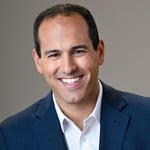
Robert Chisena, PhD
Co-Founder & CTO, AVS
Robert Chisena is the co-founder and CTO of AVS. He leads research and product development. Robert founded Amplitude Vascular Systems in 2019 with Hitinder Gurm, whom he worked with while completing his PhD in mechanical engineering at the University of Michigan. Prior to completing his doctorate, Robert studied mechanical engineering at Pennsylvania State University (BS) and the University of Michigan (PhD). Robert’s research encompasses a vast area of both of biomedical science and design, including medical device manufacturing, cardiovascular mechanics, and safety and efficacy studies of diseased tissue. Robert has authored or co-authored over 14 publications and is named as an inventor on 5 patents.
Watch the interview
Erin McKenna
Operating Partner, Amplify at Mass General Brigham Innovation
Erin McKenna is Head of Medical Devices and Operating Partner of the Amplify Program at MGB and also serves as Program Director for Brigham Ignite, an early-stage translational program for Brigham and Women’s researchers and clinicians. The Ignite program is based in part on the successful Boston Biomedical Innovation Center (B-BIC), a life science accelerator program funded by the National Institutes of Health, where Erin was the Deputy Director. Projects receiving B-BIC awards have generated over 20 times their initial return on investment on average. Previously Erin worked at Boston Scientific in Research and Development, where she launched several vascular graft and peripheral embolization products before shifting her focus to identifying and implementing company-wide product development lifecycle process improvements. Erin earned MBA and MS degrees in Global Management from Babson College, a BE in Chemical Engineering from Stevens Institute of Technology, and holds 9 issued patents.
Bio
Carolina Säve
Patent Attorney, Mintz
Carolina is a registered patent attorney at Mintz whose practice centers on protecting client innovations across mechanical, electrical, and computer science arts, including AI — serving clients in technology, life sciences, medical devices, and automotive industries. She brings particular depth as a former in-house IP director at a Massachusetts medical robotics company, where she built and managed a US and international patent portfolio spanning surgical robotics, surgical instruments, network communications, and AI-related technologies. Her work spans patent preparation and prosecution, portfolio strategy, freedom to operate analysis, licensing, and diligence, with notable expertise in automotive innovations including autonomous vehicles, battery systems, and driver-assist technologies.
Bio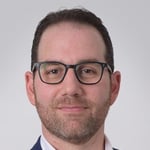
Jeffrey Abraham
Partner, Health Advances
Jeff co-leads the Digital Health and Health IT Practice at Health Advances, bringing 15 years of healthcare experience spanning digital health and therapeutics, medtech, biopharma, and healthcare services. Prior to Health Advances, he held executive roles in market access, trade, and commercial functions at Akili Interactive, a leading digital therapeutics company, where he focused on payer strategy, reimbursement, pricing, evidence generation, and launch execution — and served as a Digital Therapeutics task group co-lead for the National Council of Prescription Drug Programs and a Scientific Leadership Board Member for the Digital Medicine Society. Earlier in his career, Jeff served as Senior Director of Value Development at The Medicines Company, supporting the global launch of a novel drug-device combination and perioperative and cardiovascular pipeline products, and as a consultant at GfK focused on global market access across drugs, devices, and diagnostics. He holds an MS in Physical Therapy and an MBA with a specialization in Health Sector Management from Boston University.
Bio
Ilana Lam Gotlib
Founder, ILG Consulting
After 15 years in leadership roles at industry leaders including Stryker, Philips, and Johnson & Johnson, Ilana Lam Gotlib founded ILG Consulting, LLC with a focused mission: helping healthcare innovators tell their stories. She brings a deep conviction that even the most brilliant technologies can get lost without a clear narrative — and built her firm to be the strategic partner she always valued, one who can cut through complexity, find the "hook," and prepare teams for their biggest moments. Whether refining an investor pitch, structuring a strategic partnership, or navigating a growth hurdle, she works as an extension of her clients' teams, combining the rigor of a corporate background with the agility and personal attention that startups deserve — ensuring they are Pitch Ready, Growth Ready, and Partner Ready.
BioReferences 20
Jeffrey Abraham, Partner, Health Advances
Robert Chisena, Ph.D., Co-Founder and Chief Technology Officer, AVS
Ilana Lam Gotlib, Founder, ILG Consulting, LLC
Erin McKenna, Head of Medical Devices and Operating Partner of the Amplify Program at Mass General Brigham and Program Director for Brigham Ignite
Carolina Säve, Of Counsel, Mintz, Levin, Cohn, Ferris, Glovsky and Popeo, P.C.
Upma Sharma, President & Chief Executive Officer, Arsenal Medical
Fortune Business Insights. (2026, March 2). U.S. medical devices market. https://www.fortunebusinessinsights.com/u-s-medical-devices-market-107009
Vespa, J., Medina, L., and Armstrong, D. (2018, March, revised 2020, February). Demographic turning points for the United States: population projections for 2020 to 2060. https://www.census.gov/content/dam/Census/library/publications/2020/demo/p25-1144.pdf
PwC. (2026, January 9). The future of medtech: Orchestrating the next evolution of healthcare. https://www.pwc.com/us/en/industries/health-industries/library/future-of-medtech.html
AdvaMed®. Medical device industry facts. Retrieved on March 23, 2026. https://www.advamed.org/medical-device-industry-facts/
Broder, S., and Cushing, M. (1993, February). Trends in program project grant funding at the National Cancer Institute. https://pubmed.ncbi.nlm.nih.gov/8425180/
Science.org. (2011, May 3). From the lab to the clinic and back: Translational research training and careers. https://www.science.org/content/article/lab-clinic-and-back-translational-research-training-and-careers
The National Center for Advancing Translational Sciences. https://ncats.nih.gov/
National Institutes of Health. Translational Science Training Program. Retrieved on March 20, 2026.
https://www.training.nih.gov/skills/communication/translational-science-training-program/
Hutson, S. (2009, February). HHMI's Med Into Grad Initiative expands. Nature. https://www.nature.com/articles/nm0209-123b
Omondi, P. (2025, February 3). Unlocking the power of intellectual property in medical technology. WIPO Magazine. https://www.wipo.int/en/web/wipo-magazine/articles/unlocking-the-power-of-intellectual-property-in-medical-technology-71322
Roses, J. (2025, November 18). Navigating medical device regulation and IP protection in the United States (Part 2 of 2). https://wolfgreenfield.com/articles/navigating-medical-device-regulation-and-ip-protection-in-the-united-states-part-2-of-2
Toshniwal, M. (2026, January 15). Non-dilutive funding sources for healthcare startups. https://qubit.capital/blog/non-dilutive-funding-sources-healthcare-startups
FundTQ. (2025, December 5). Five top funding sources for medical device startups. https://fundtq.com/medical-device-startup-funding/
JOIN OUR NEWSLETTER
Get Quarterly Insights Delivered





.webp?width=1921&height=1081&name=Content%20Card%20-%20Just%20Mighty%20-%20Boyd%20-%20Two%20Color%20-%20Full%20(1920%20x%201080).webp)
.png?width=401&height=401&name=Logo%20-%20Just%20Mighty%20-%20White%20Logo%20(400%20x%20400).png)