
A 50-year-old American has been completely consumed with a negative narrative about manufacturing for their entire life. This was not only their guidance counselor telling them manufacturing was a dead-end career. Our culture has romanticized a narrative of leaving rural America and escaping the production floor for half a century. At the time, this was a valid criticism of manufacturing, and it seeped into every corner of our lives.
But today, Americans show overwhelming support for manufacturing.
- 90% believe it is very important to American economic prosperity.
- 89% believe it is very important to America's standard of living.
- 72% believe it is very important to America's national security.
- Yet, only 37% of Americans would encourage their children to have a career in manufacturing. (Bonvillian & Singer, 2018).
Why? Because a false narrative exists about manufacturing, and we need to change it.
Leon Amariglio on how vertical integration in manufacturing improves quality and innovation.
The False Narrative
The false narrative is a relic of the Industrial Revolution. Our prosperity during this period eventually reached a point of diminishing returns. We treated manufacturing, and most importantly its people, as costs and never as benefits, and our relationship with manufacturing became reductive. The only competitive advantage we could extract from it was to reduce it. So, we chased these diminishing returns overseas and abandoned the notion that manufacturing could deliver value beyond the labor market.
As a result, American manufacturing has declined while others have invested, and we are at serious risk of falling further behind. Over the next decade in the United States, 4 million manufacturing jobs will be needed, and 2.1 million are expected to go unfilled if we do not inspire more people to pursue modern manufacturing careers (National Association of Manufacturers, n.d.).
The Evolution of Manufacturing
While American manufacturing has declined other nations have systematically invested in manufacturing. Japan developed the quality-production revolution. Germany integrated its smaller and larger producers with its engineering schools and created an outstanding apprenticeship training system. And despite our stereotypical view of China's manufacturing capabilities - as low skilled and low cost - they also invested. China developed a rapid, integrated, scale-up capacity across regional producers and focused their government support. These countries pursued fundamental long-term investments in their manufacturing and innovation ecosystems.
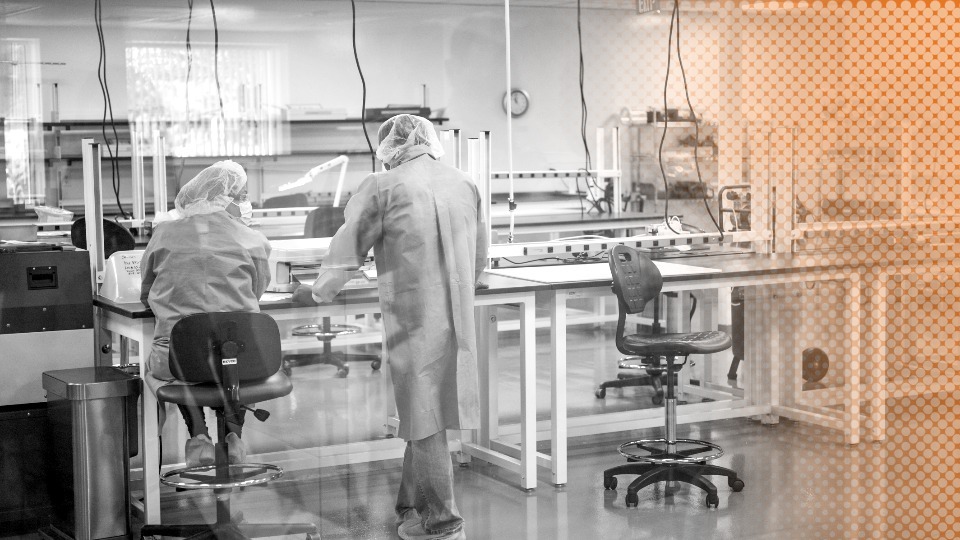
Meanwhile, advanced manufacturing has evolved. It is an exciting innovative ecosystem that provides tremendous value to the economy in addition to jobs. It is not dark, dirty, and dangerous anymore. Instead, it is bright, clean, and an essential ingredient in innovation. This is especially true in advanced materials, biotechnology, medical devices, and other advanced technology industries.
The New Narrative
Our documentary film, Project Frontline, examined the relationship between manufacturing and innovation. Manufacturing is an essential ingredient of innovation. We've seen first-hand how investing in it directly increases total innovative capacity, and neglecting it reduces total innovative capacity. I talk more about that in our key findings. This relationship between innovation and manufacturing is where the narrative about manufacturing should focus. In research from Harvard Business School, Professor Willy Shih (Pisano & Shih, 2012) says,
"Manufacturing is often highly integral to the innovation process, and the common assumption that the United States can prosper as an "innovator" without manufacturing is a dangerous one" (Pisano & Shih, 2012).
Willy Shih
Professor, Harvard Business School
Young people can be compelled by what is new and exciting. The future of advanced manufacturing is on the front edge of innovation. Discoveries, concepts, and even prototypes do not become innovations without manufacturing. Manufacturing supports prototyping, pilot production, demonstrating and testing products, and early-stage small run production during commercial scale-up. Manufacturing supports and contributes to innovation. As markets shift towards customization and personalization, the feedback loop between product development and manufacturing will continue to become tighter. The cutting edge of new hard technologies is happening on the production floor.
Manufacturing Innovation
In a recent interview with Lexington Medical CEO and Founder Leon Amariglio, we discussed his decisions to invest in domestic manufacturing long before the pandemic made it fashionable. Of course, this is atypical behavior for a Medical Device start-up. But this vertical integration provides Lexington Medical with two important advantages:
- Controlling product quality
- Increasing the pace of innovation
By investing in domestic manufacturing, Lexington has optimized the feedback loop between the field, where they receive feedback from surgeons, and the manufacturing floor, where they implement new product iterations.
Manufacturers in the United States perform 57.9% of all private-sector R&D in the nation, driving more innovation than any other sector. R&D in the manufacturing sector has risen from $132.5 billion in 2000 to $295.7 billion in 2020 (National Association of Manufacturers, n.d.). Modern manufacturing teams are agile, adaptable, and innovative.
This new era of manufacturing is about innovation. And innovation is the most compelling, and accurate, narrative about advanced manufacturing today. We better start telling it, or we won't be the ones doing it.
Contributors

Matthew Boyd
Chief Commercial Officer, Boyd Biomedical
Matthew is the Chief Commercial Officer of Boyd Biomedical and is a member of the Board of Directors. He has over 15 years of experience as an executive leader in the biomedical industry. Matthew is a Board Member of the Massachusetts Medical Device Industry Council (MassMEDIC), the largest regional MedTech association in the United States. He serves on the steering committee and as a mentor for MassMEDIC's Ignite Accelerator Program. Matthew is actively involved as an alumnus of Babson College's Graduate School of Business, where he serves as a mentor for the Institute for Family Entrepreneurship. He is the producer of the documentary film Project Frontline and host of the video series Design Build Launch with Boyd Biomedical. Matthew joined Boyd Biomedical in 2007 as the Vice President of Business Development. Prior to joining Boyd Biomedical, Matthew worked in Fixed Income Sales & Trading at Citigroup Global Markets. Matthew received a BA in Economics from the University of Vermont and his MBA from the F.W. Olin Graduate School of Business at Babson College.
Bio